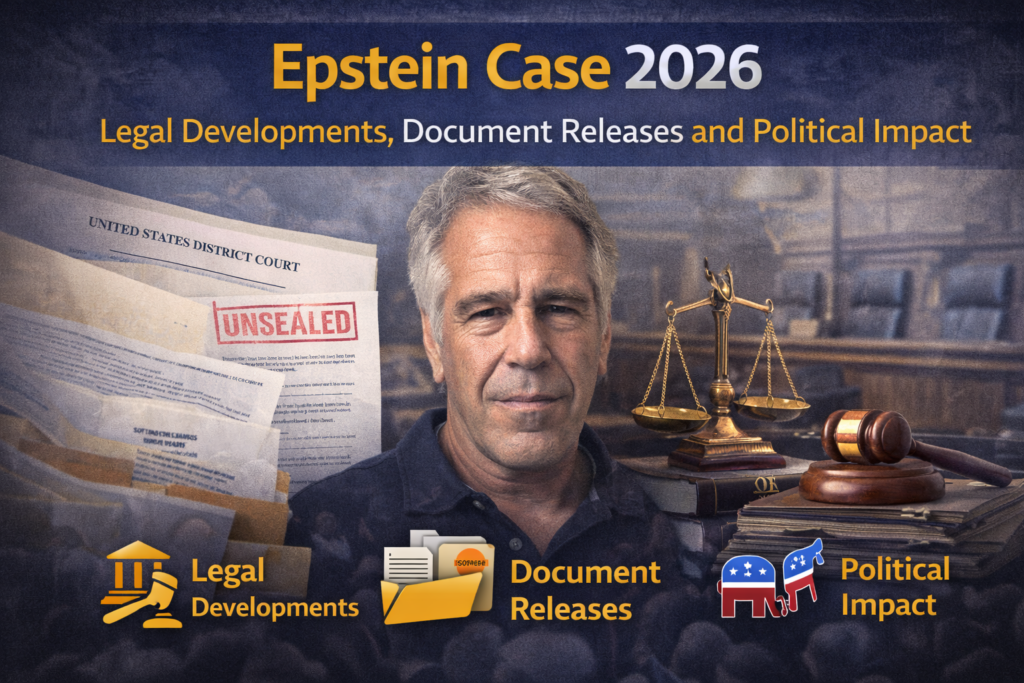
The Epstein Case 2026 continues to generate legal, political, and international attention years after the death of financier Jeffrey Epstein in federal custody in 2019. While the criminal proceedings against Epstein ended with his death, the broader network of civil lawsuits, document disclosures, investigative reviews, and political scrutiny remains active.
As new court filings emerge and previously sealed records continue to surface, the Epstein Case 2026 represents not only a legal matter but also a test of institutional transparency, accountability, and public trust. This article provides a comprehensive analysis of the legal developments, document releases, and political impact shaping the Epstein Case 2026.
Join our social media platform
Background: From Criminal Charges to Ongoing Litigation
The origins of the Epstein Case 2026 lie in earlier federal investigations into sex trafficking allegations. After Epstein’s arrest in July 2019 on charges related to the trafficking of minors, his death in custody triggered widespread scrutiny of the criminal justice system.
Although the direct criminal prosecution ended, civil litigation and document review processes continued. Courts have since handled:
- Victim compensation lawsuits
- Civil claims against associates
- Defamation-related cases
- Document unsealing motions
- Institutional negligence investigations
By 2026, the case has evolved into a complex legal ecosystem involving federal courts, state jurisdictions, and international cooperation.
Legal Developments in the Epstein Case 2026
1. Ongoing Civil Lawsuits
Several civil lawsuits linked to Epstein’s alleged network remain active in 2026. Plaintiffs continue to seek financial damages and accountability from individuals and institutions allegedly connected to Epstein’s operations.
Key legal themes include:
- Institutional liability
- Financial facilitation claims
- Negligence allegations
- Settlement negotiations
Many of these cases proceed independently of the original criminal investigation, extending the legal relevance of the Epstein Case 2026.
2. Appeals and Document Unsealing Motions
One of the defining features of the Epstein Case 2026 is the continued release of documents. Courts have reviewed motions to unseal:
- Deposition transcripts
- Financial records
- Email communications
- Travel logs
- Investigative memoranda
Redactions remain a central issue. Judges balance privacy rights, victim protection, and public transparency.
Legal analysts note that unsealing processes can extend over multiple years due to appeals and confidentiality disputes.
3. Federal Oversight Reviews
Congressional committees and oversight bodies have examined procedural aspects of the case, particularly focusing on:
- Jail security protocols
- Prosecutorial decisions
- Plea agreement transparency
- Federal prison monitoring systems
Although these reviews do not constitute criminal prosecutions, they shape public understanding of institutional responsibility.

Document Releases in 2026
The Epstein Case 2026 remains closely tied to document transparency debates.
Redacted vs Unredacted Records
Document releases fall into two categories:
- Fully unsealed documents
- Partially redacted materials
Redactions typically protect:
- Victim identities
- Third-party privacy
- Ongoing investigative details
- National security considerations
Observers continue to analyze whether additional unredacted disclosures will occur in 2026.
Volume of Released Materials
The Department of Justice archive contains millions of pages, including:
- Court filings
- Civil complaint records
- Financial correspondence
- Investigative summaries
However, not all records are publicly accessible. The Epstein Case 2026 continues to revolve around which materials are legally releasable.
Political Impact of the Epstein Case 2026
The political consequences of the Epstein Case 2026 extend across party lines.
1. Institutional Trust Debate
Public confidence in legal institutions remains a recurring theme. Critics argue that earlier plea agreements and prosecutorial discretion decisions require deeper scrutiny.
Political figures reference the Epstein Case 2026 when discussing:
- Judicial reform
- Prison oversight
- Federal transparency policies
2. Election Cycle Relevance
As the 2026 US political landscape intensifies, some campaigns reference broader accountability narratives tied to document transparency.
However, no major candidate has positioned the Epstein Case 2026 as a central campaign issue. Instead, it functions as part of broader debates around elite accountability and public oversight.
3. Media and Digital Ecosystem
The Epstein Case 2026 continues to generate digital attention across social media and alternative platforms. Analysts caution that:
- Unverified claims circulate frequently
- Context is sometimes missing from document excerpts
- Sensational framing can distort legal realities
Responsible coverage emphasizes primary court documents and verified filings.
International Repercussions
Although primarily a US legal matter, the Epstein Case 2026 carries international dimensions.
Financial Network Scrutiny
Cross-border financial investigations have examined:
- Offshore accounts
- International transfers
- Real estate holdings
Global regulatory bodies continue to evaluate compliance mechanisms.
Diplomatic Sensitivities
International figures mentioned in earlier filings occasionally appear in foreign media discourse. However, inclusion in documents does not automatically imply legal culpability.
Legal experts stress the distinction between:
- Being named in records
- Being formally charged
- Being convicted
Legal Experts’ Perspectives
Legal scholars analyzing the Epstein Case 2026 highlight several structural lessons:
- The importance of transparent plea agreements
- The complexity of multi-jurisdictional investigations
- The challenge of balancing privacy with transparency
- The difficulty of prosecuting network-based crimes
The case has influenced policy discussions on:
- Human trafficking enforcement
- Victim compensation mechanisms
- Federal detention oversight
Transparency vs Privacy: The Core Legal Tension
At the center of the Epstein Case 2026 lies a fundamental legal tension:
- Public right to know
- Individual right to privacy
Courts apply established legal standards when determining whether to unseal records. Each decision considers:
- Relevance
- Potential harm
- Procedural fairness
Market and Institutional Response
While the case is legal in nature, institutions mentioned in earlier filings have undertaken:
- Internal reviews
- Governance audits
- Compliance reforms
Corporate boards have increased attention to reputational risk management.
The Future of the Epstein Case 2026
Looking forward, potential developments include:
- Additional civil settlements
- Further document unsealing
- Appeals related to redactions
- Institutional policy reform
However, absent new criminal indictments, the Epstein Case 2026 remains primarily civil and administrative in character.
Responsible Reporting Guidelines
Because the Epstein Case 2026 involves sensitive subject matter, responsible coverage requires:
- Verification of court documents
- Avoidance of unsubstantiated claims
- Clear distinction between allegation and conviction
- Protection of victim identities
Conclusion
The Epstein Case 2026 represents an ongoing legal and institutional chapter rather than a closed historical file. Civil litigation, document releases, and oversight reviews continue to shape public understanding of the case.
Its political impact remains indirect but meaningful, influencing debates about transparency, accountability, and institutional reform. As courts evaluate further unsealing requests and civil proceedings advance, the Epstein Case 2026 will likely remain part of broader conversations about legal process and public trust.
Future developments will depend on judicial decisions, appeals outcomes, and ongoing litigation processes.
Read More

🚨 Gujarat Breaking: Live Updates Today
Breaking Gujarat, election updates, conflicts, peace talks, and developments.